How to choose gardening gloves for wet Irish soil
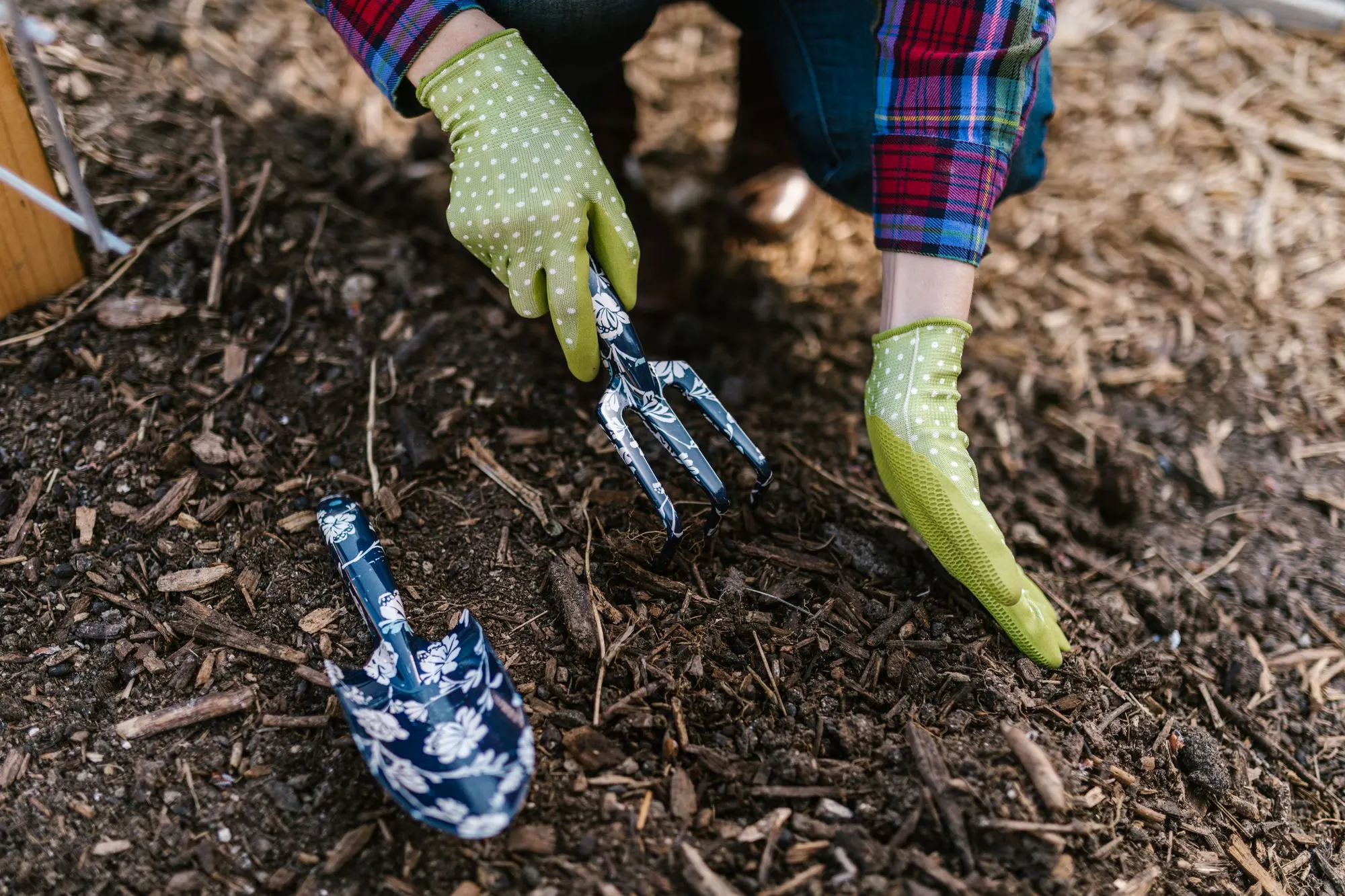
One pair of gloves won’t do every job in the garden. Here’s what the different types are good for, how they should fit, and how to keep them from going stiff and smelly in a damp shed.
Gloves are the most ordinary thing in a gardener’s kit, and probably the most often replaced. A cheap pair that leaks, slips or rubs is worse than none. A good pair you forget you’re wearing. In an Irish garden, where the soil is usually wet and half the jobs involve something prickly, it’s worth thinking about which gloves you actually need.
The main types
- Coated knit gloves are the best everyday choice for most people. They have a stretchy knitted back that lets your hand breathe, and a palm and fingers dipped in nitrile or latex for grip and to keep the wet out. They’re light enough for planting, weeding and handling seedlings, and cheap enough to keep a couple of pairs. Nitrile coatings generally last better than latex and suit anyone with a latex allergy.
- Leather gloves are for rough work: brambles, holly, roses, firewood, and anything with thorns or splinters. Goatskin is supple and lets you feel what you’re doing. Cowhide is tougher but stiffer. For pruning roses or clearing a thorny hedge, gauntlets with long cuffs protect your forearms as well.
- Waterproof and thermal gloves make winter jobs bearable: clearing leaves from a pond, emptying a water butt, lifting leeks in December. Look for a fully waterproof coating and a warm lining.
- Plain cotton or jersey gloves are fine for light, dry jobs, but they soak through quickly. In wet soil they’re not much use.
For most gardens, a couple of pairs of coated knit gloves for everyday jobs plus one pair of leather gloves or gauntlets for the thorny ones will cover nearly everything.
Getting the fit right
Gloves that are too big make you clumsy and cause blisters where they rub. Gloves that are too small tire your hands and wear through at the fingertips. Most glove sizes go by the measurement around your palm, just below the knuckles, not counting the thumb. Measure your dominant hand and check it against the maker’s size chart. When you try them on, make a fist. The gloves should flex without pulling tight across the knuckles, and there shouldn’t be loose material at the fingertips.
Reading the label
Many work and garden gloves carry an EN 388 mark, a shield symbol with a row of numbers and letters underneath. These rate the glove’s resistance to abrasion, cuts, tearing and puncture, with higher numbers meaning more protection. You don’t need to study it. But if you’re comparing two pairs for rough work, the one with higher numbers will stand up to thorns and wear better.
Looking after them
- Dry them properly. Gloves thrown wet into a bucket in the shed go mouldy, stiff and smelly. Peg them up or put them somewhere airy indoors to dry, but not on a radiator. Direct heat cracks leather and coatings.
- Wash coated gloves. Most can be rinsed out or put through a cool wash. Check the label. Let them dry naturally.
- Look after leather. Brush off dried mud, let wet leather dry slowly at room temperature, and rub in a little leather conditioner now and then to keep it supple.
- Keep spares. Gloves always wear out at the same fingertips. Having a second pair means you’re not tempted to put your hands into a bramble patch in a pair with holes in them.
Gloves and tools
It’s worth trying a new pair of secateurs on with the gloves you’ll actually wear, especially the catch that locks them shut. For more on picking a pair that suits your hand, see how to choose secateurs. And for the jobs gloves will be needed for this month, see the Irish garden in November.