Outdoor Christmas lights that survive an Irish December
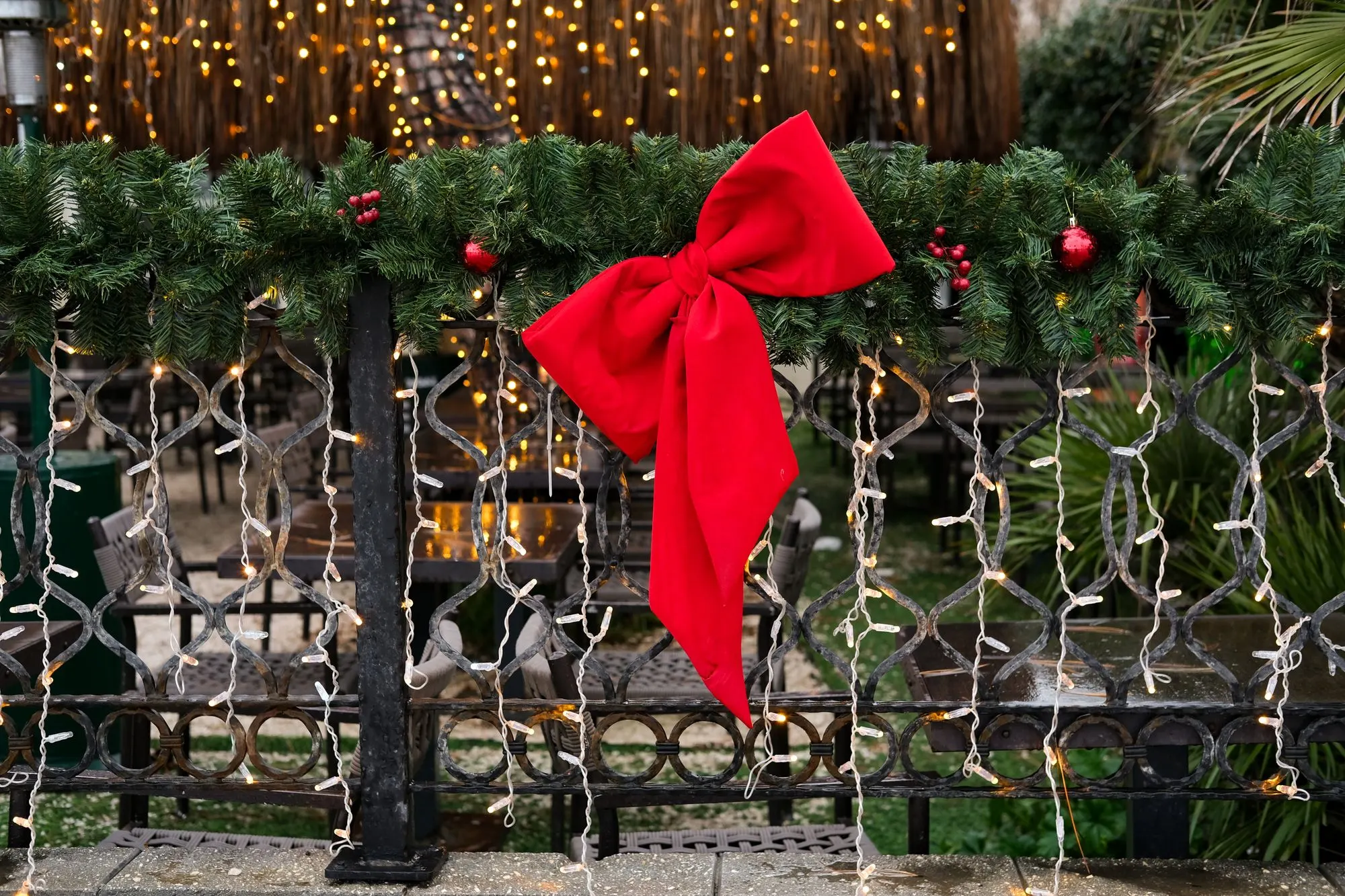
Lights along the hedge or round the porch make the whole road look better in December. Here’s how to put them up so they’re still working, and still safe, when the first storm of the winter comes through.
Outdoor lights have an easy job in most of the brochures: a still, frosty night, and snow if you’re lucky. An Irish December is rain blown sideways, weeks of damp, and a named storm or two. Most failures come down to the same few things: lights that were never meant for outdoors, water getting into a connection, or a cable left to flap in the wind. All of them are easy to avoid.
Start with the box: IP44 or better
Lights sold for outdoor use carry an IP rating, a two-digit code for how well they keep out dust and water. For anything going outside, look for IP44 or higher. IP44 means protected against water splashed from any direction, which covers rain. A higher second digit (IP65, IP67) means better protection against jets of water or brief immersion. That’s worth having for anything lying low in a bed or near a downpipe.
If the box doesn’t mention an IP rating, or says “indoor use only”, keep them inside. That includes the porch. A porch is outdoors as far as damp is concerned.
Low-voltage sets are the safer choice
Many outdoor sets run through a transformer, the small box near the plug, so the lights themselves carry only a low voltage. If something goes wrong out in the wet, that’s a lot more forgiving than mains voltage running along the hedge. Check where the transformer is meant to go. Some are rated for outdoor use, and others must be kept indoors or in a weatherproof box.
Getting power outside
- An outdoor socket is the best option. It should be a weatherproof type, and its circuit should be protected by an RCD, the safety switch that cuts the power if current leaks to earth. Most modern Irish fuse boards have one. If yours is older or you’re not sure, ask an electrician to check.
- If you’re using an indoor socket, don’t run the cable through a closed window or door. The frame will crush it a little more every time it shuts. Run it through a gap made for the purpose, or have an outdoor socket fitted. It’s a modest job for an electrician and you’ll use it for years.
- Extension leads must be rated for outdoor use, and the connections must be kept out of the rain. Put them in a weatherproof connector box, or bring them back indoors. Don’t join one extension lead to another.
- A plug-in RCD adaptor costs little and adds protection if you’re not sure about the circuit.
Putting them up for the wind
- Use proper light clips or loose cable ties. Never nail or staple through the cable.
- Pull the cable snug, not tight. Hedges and branches move in a gale, and a cable under tension will pull out of its clips or pull apart a connection.
- Keep plugs and connectors off the ground and out of places where water collects. Point connectors downwards so rain runs off them rather than into them.
- Use a ladder for high work, on firm, level ground, with someone holding the bottom. Don’t do it on a windy day, however tempting the dry spell is.
Before you plug in last year’s set
Run the whole length through your hands before it goes up. Look for cracked or split cable, broken bulb holders, and any sign of water or corrosion in the plug and connectors. If you find damage, throw the set out (at a recycling centre, as they count as electrical waste) rather than taping it up. Lights are cheap. Fires and shocks aren’t.
Timers, batteries and solar
- A timer is the easiest improvement. Set it to come on at dusk and go off around eleven. You won’t forget to switch them on, and they won’t burn all night.
- LED sets use very little power. A typical small set run for six hours a night through December costs well under a euro in electricity for the whole season.
- Battery sets with a built-in timer are handy for a wreath or a pot by the door where there’s no socket nearby. Rechargeable batteries will save you a fortune.
- Solar sets have a hard time here in December. There’s very little daylight, and most of it is grey. They give a nice glow for the first few hours of the evening, but don’t count on them lasting until late.
When a storm is forecast
When Met Éireann puts out a wind warning, walk round and check the clips and connections the evening before. Take in anything loose, especially lights on a wreath or in a pot that might blow over. If you have lights high in a tree, it’s safer to switch them off at the plug overnight.
Taking them down
Pick a dry day. Unplug before you touch anything. Let the lights dry out fully indoors, then wind each string around a piece of stiff card or an old reel and store it in a box, not a bag. Next December you’ll be glad you did. For the rest of the front of the house, see our guide to dressing the front door for an Irish Christmas.