The window
A year at the window
You don’t need a garden to watch the seasons come and go. A pane of glass will do, and a kettle, and a few minutes most mornings.
The same few birds come to the glass all year. Watch for long enough and you start to know the year by who turns up, and how they behave when they do.
The first cold
Winter
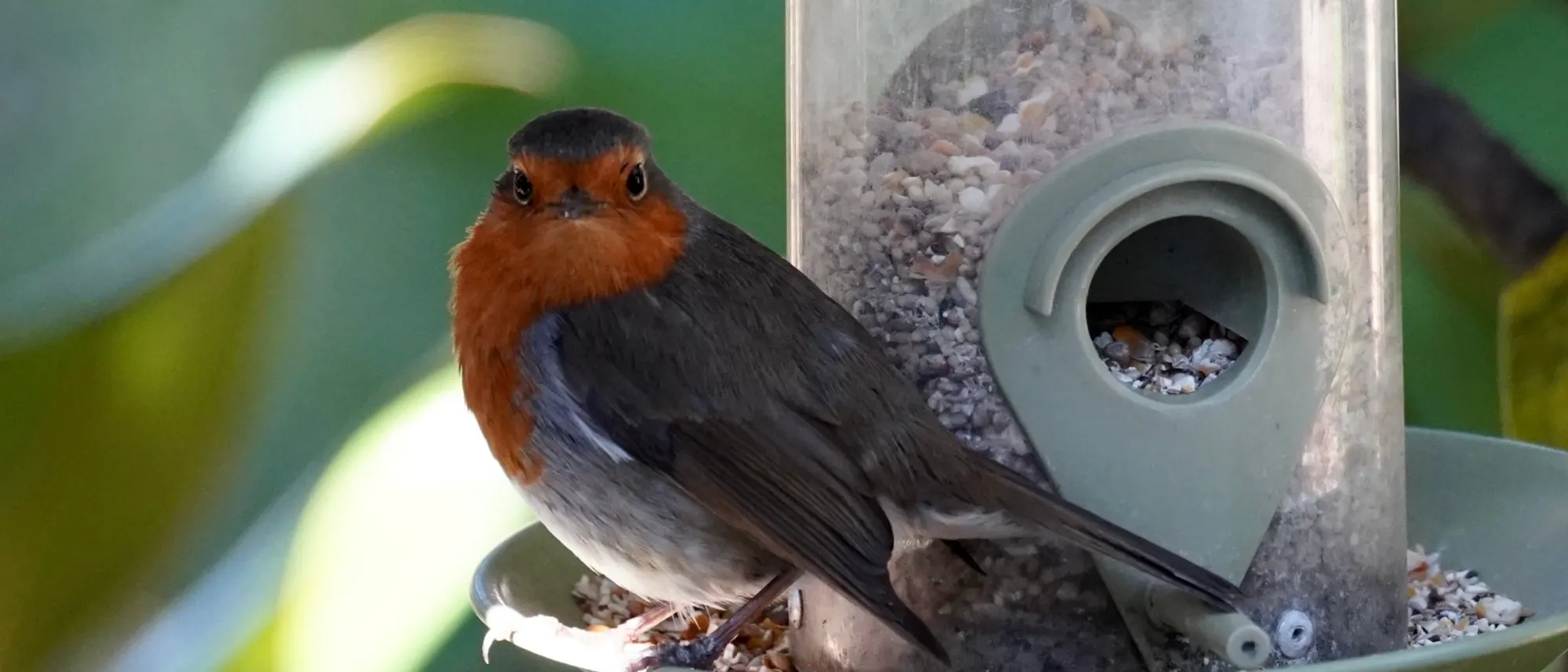
Frost on the sill, the kettle not yet boiled, and there it is: a robin, an arm’s length away, looking in as if you were the one on show.
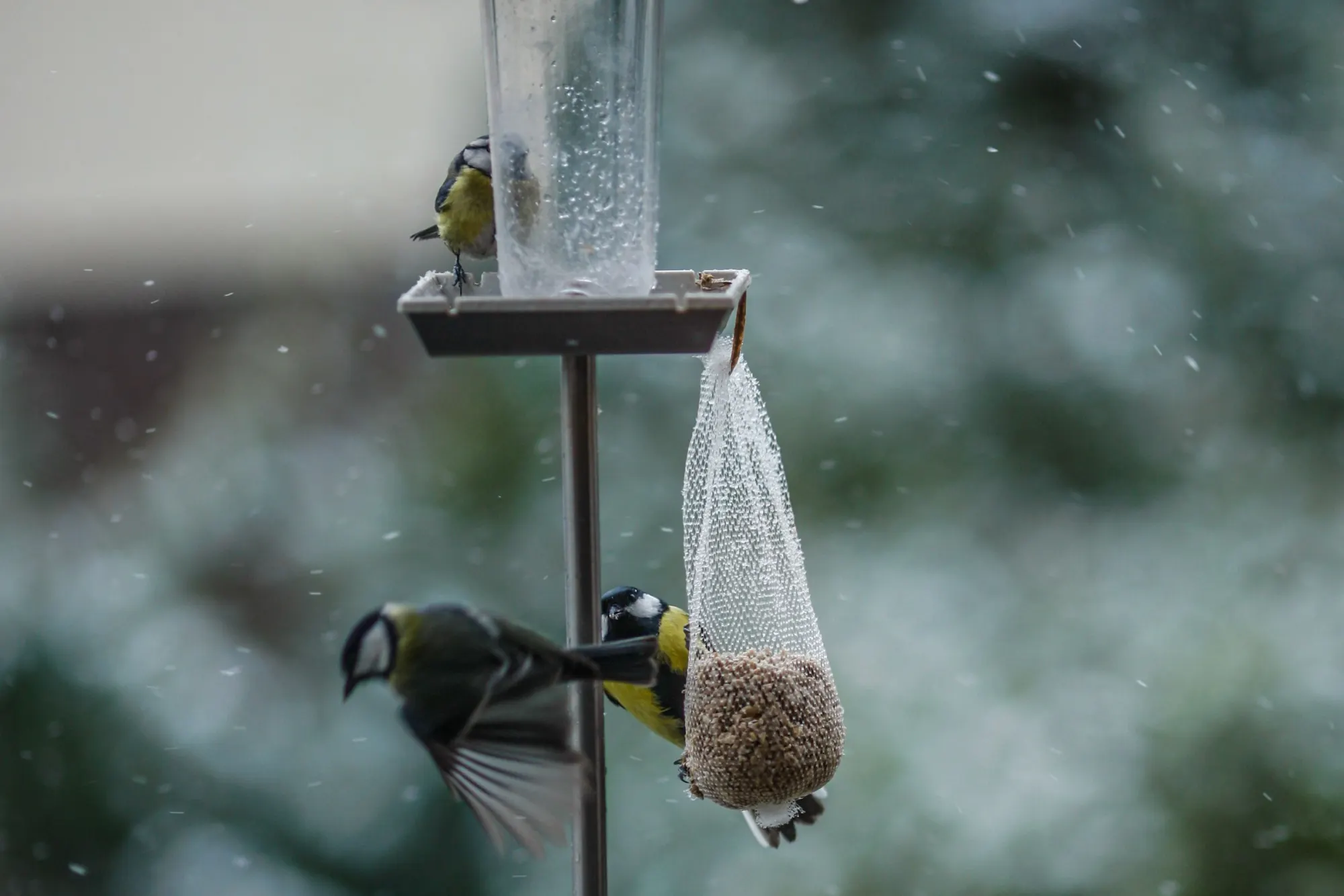
Through the short days the window is the busiest place in the garden. The tits come in pairs and leave with a seed each. A blackbird turns over the leaves underneath. On Sunday mornings the feeder comes in for a scrub and goes back out clean, and nobody outside says thank you, but they keep coming.
The robin is one of the few birds that sings all winter. The male and the female each hold a patch of their own through the cold months, and they sing to keep it.
A way to mark it: on the first frosty morning, put something out on the sill before you make your own breakfast.
In Ireland · December to February
For more than thirty winters, BirdWatch Ireland has asked people to count the birds in their gardens from the start of December to the end of February. Last winter more than 1,600 households took part, and the robin turned up in almost every one of them.
The first warmth
Spring
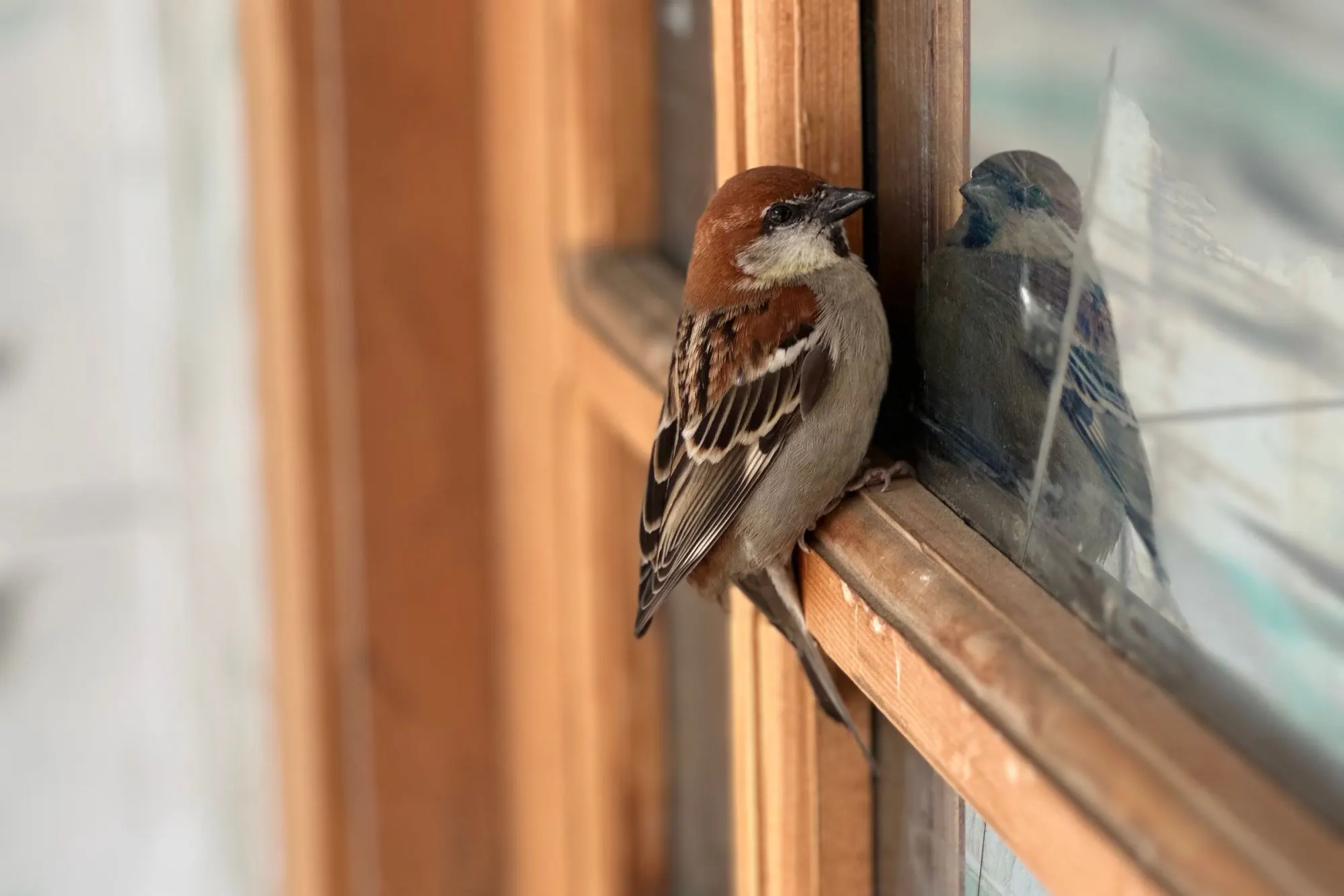
One morning the singing starts before it’s light. Then the visitors begin to leave with their beaks full: moss, a wisp of dog hair, a feather off the lawn. Somewhere close a nest is going together, and you have a seat in the front row.
A way to mark it: write down the first morning you hear birdsong before dawn.
In Ireland · April
The swallows come back from southern Africa. Many return to the same shed or barn they left the autumn before, and a pair will often take over the very same nest. They’re arriving around two weeks earlier than they did in the 1960s.
The longest light
Summer
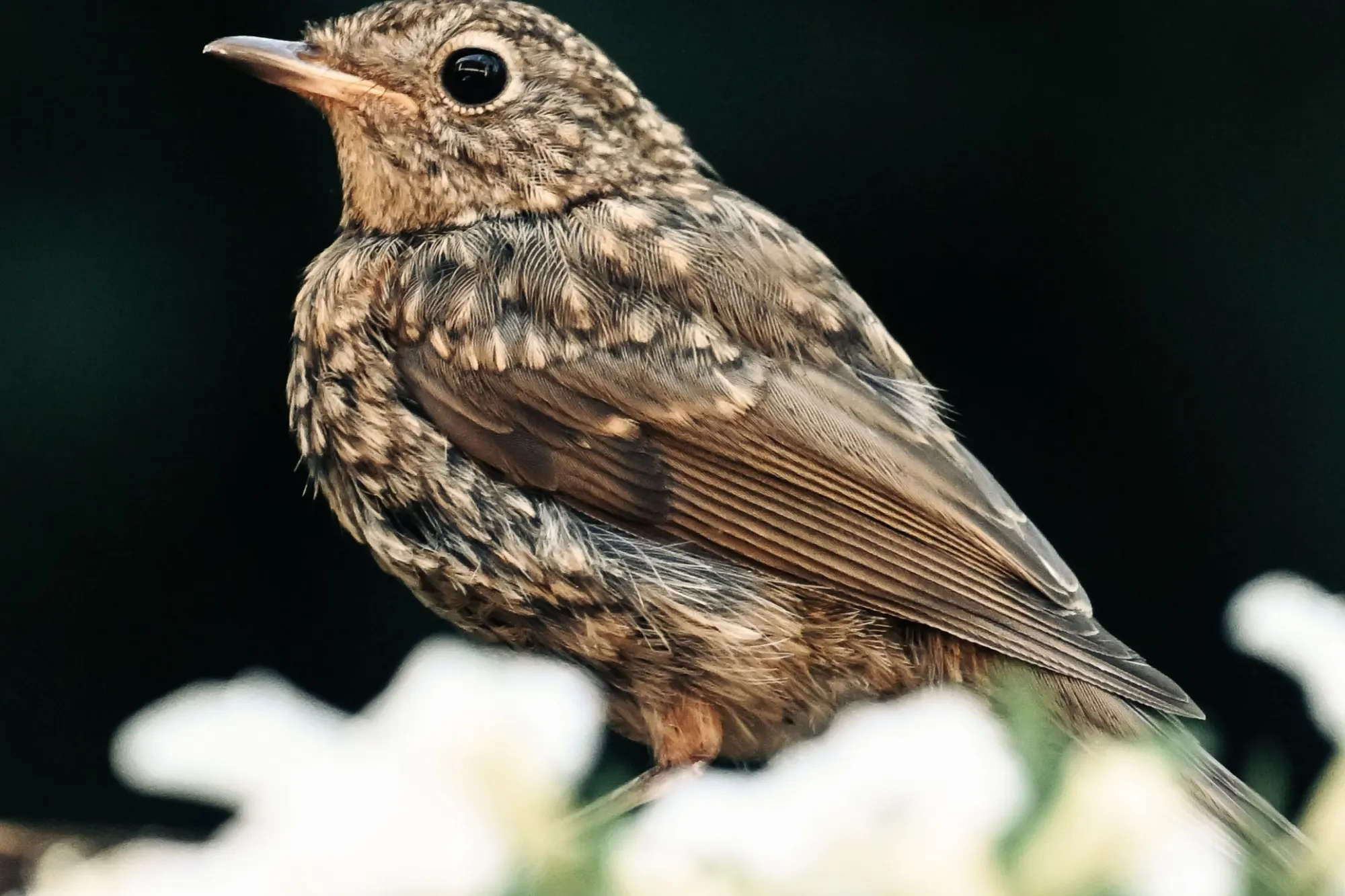
The feeder goes quiet. There’s food everywhere now, and the birds are busy elsewhere. Then, one long evening, the young ones arrive: fluffed up, clumsy, shouting to be fed by a parent who looks worn out.
A young robin has no red breast. It wears a coat of speckled brown, and it won’t look like a robin until the end of the summer.
A way to mark it: on the warmest day of the year, leave a shallow dish of water on the sill.
The first harvest
Autumn
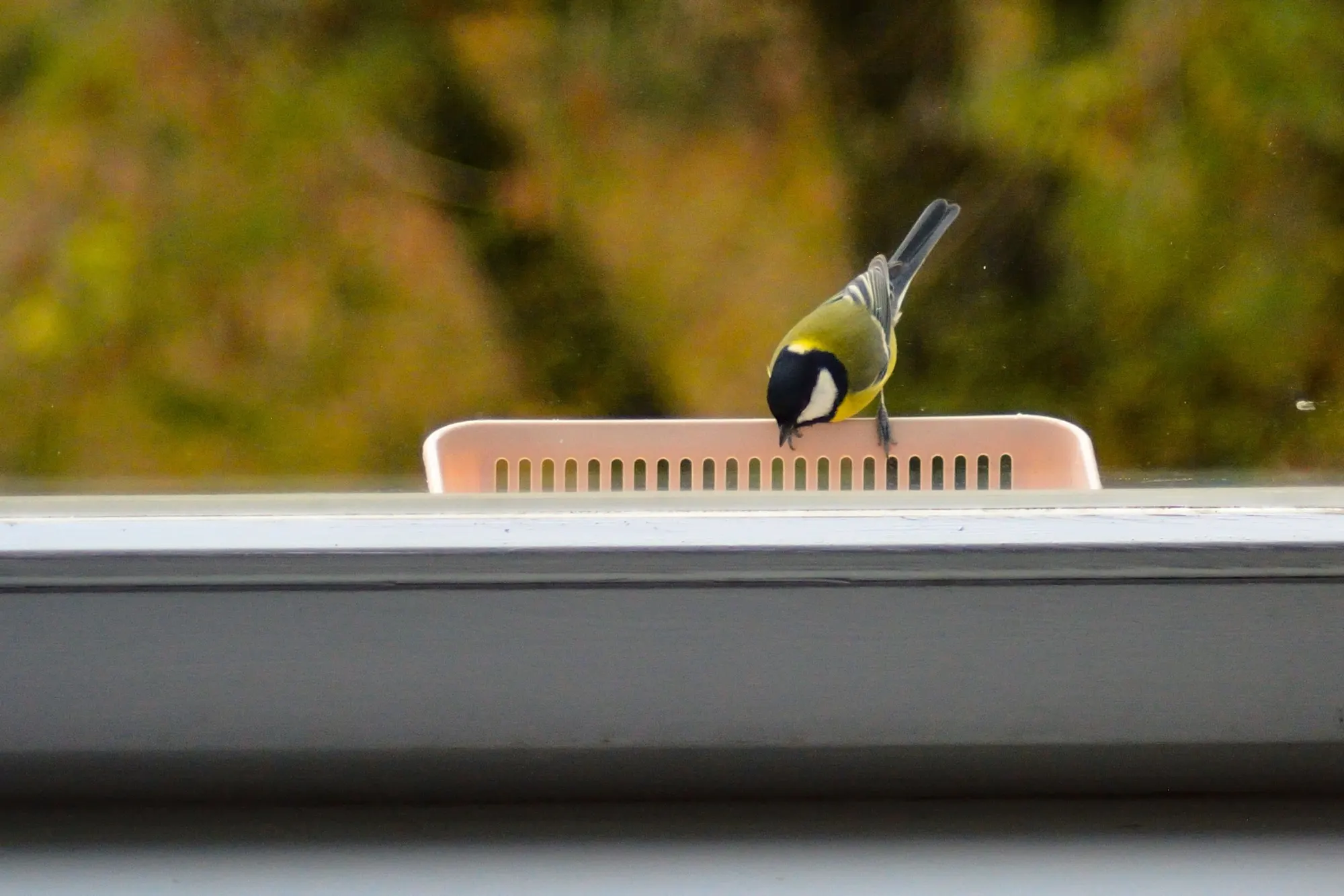
The swallows line up on the wires, and one morning they’re gone. Then the window starts to fill up again. The tits come back to the sill, a little hungrier every week, and the hedges are heavy with berries for birds that have come a long way to eat them.
A way to mark it: the week the swallows leave, fill the feeder again.
In Ireland · October
Redwings and fieldfares arrive for the winter, thrushes from Iceland and Scandinavia. They travel by night, in loose flocks, and they stay until March.
The window list
A card on the inside of the glass and a pencil on the sill. The first robin song before dawn. The first beak full of moss. The first speckled youngster. The day the swallows go, and the night the redwings come.
That’s all it is. By the end of the year you have a calendar that nobody else has, and next year you can hold it up against the last one.
Wherever you are
The birds change from place to place: a cardinal in Toronto, a white-eye in Tokyo, a robin in Cork. The window is the same. Tell us who comes to yours at hello@untoldseasons.com.
Live the year, not just the weeks.